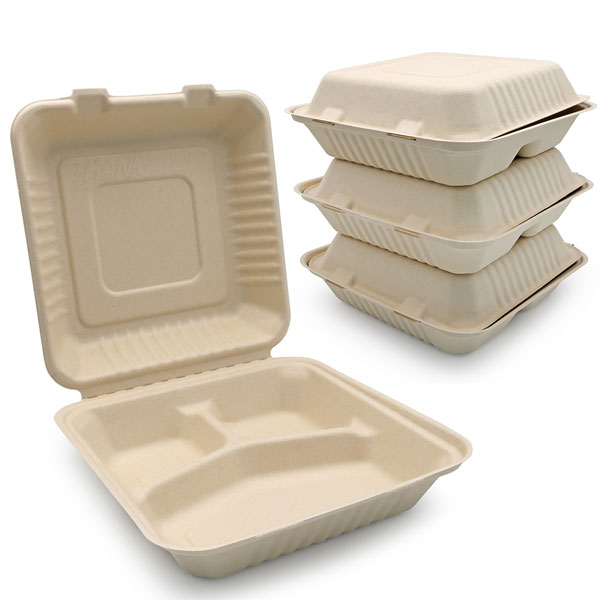
For multinational restaurant brands operating across continents, packaging logistics present one of the most complex and costly challenges in today's competitive landscape. The traditional approach of sourcing different compostable plates and packaging materials regionally creates fragmented supply chains, inconsistent quality standards, and ballooning operational expenses that directly impact profitability.
Leading restaurant chains face mounting pressure from two fronts: consumers demanding sustainable alternatives to plastic, and shareholders expecting streamlined operations with predictable costs. The conventional solution of working with multiple regional suppliers for compostable plates and packaging creates a logistical nightmare—different material specifications, varying quality standards, inconsistent pricing, and complex inventory management across borders.
Our analysis of global restaurant operations reveals that packaging logistics typically account for 15-25% of total operational costs. This includes not just material costs, but also transportation, warehousing, customs clearance, quality control, and the administrative overhead of managing multiple supplier relationships across different regions.
Sugarcane bagasse—the fibrous byproduct remaining after sugar extraction—has emerged as the ideal material for creating standardized compostable plates that perform consistently across global markets. Unlike other biodegradable materials that vary by region, sugarcane bagasse offers uniform properties that enable true global standardization.
Our engineered sugarcane bagasse compostable plates provide exceptional heat resistance (up to 220°F/104°C), oil and moisture resistance, and structural integrity comparable to traditional plastic alternatives. The material's natural composition ensures consistent performance whether used in tropical climates or temperate regions, eliminating the need for region-specific formulations.
By implementing a single-source global solution for compostable plates, multinational restaurant brands achieve remarkable supply chain simplification:
• Supplier Consolidation: Reduce from 8-12 regional suppliers to a single global partner
• Quality Standardization: Eliminate variations in material performance and appearance
• Inventory Optimization: Centralized forecasting and distribution reduces safety stock requirements by 60%
• Administrative Efficiency: Cut procurement and supplier management overhead by 75%
Our standardized approach to compostable plates packaging delivers substantial logistics savings through several mechanisms:
• Bulk Shipping Advantages: Consolidated global shipments achieve 25-30% better freight rates
• Packaging Density: Optimized plate design increases container utilization by 40%
• Customs Simplification: Standardized HS codes and documentation reduce clearance times and costs
• Regional Distribution Hubs: Strategic warehousing locations minimize last-mile transportation expenses
Transitioning to a global standardized compostable plates solution follows a structured four-phase approach:
1. Assessment Phase: Comprehensive analysis of current packaging spend, supplier relationships, and regional requirements
2. Design Phase: Development of standardized plate specifications that meet all regional operational needs
3. Transition Phase: Phased implementation with minimal disruption to ongoing operations
4. Optimization Phase: Continuous improvement based on performance data and emerging requirements
A leading global quick-service restaurant chain with operations in 45 countries implemented our sugarcane bagasse compostable plates solution and achieved:
• 42% reduction in packaging-related supply chain complexity
• 37% decrease in global logistics costs within 18 months
• 95% customer satisfaction with plate performance across all regions
• Complete elimination of plastic packaging from their global operations
• 28% improvement in sustainability ratings across all markets
Our sugarcane bagasse compostable plates not only solve operational challenges but also deliver superior environmental benefits. The plates complete their lifecycle in commercial composting facilities within 60-90 days, returning valuable nutrients to the soil. This circular approach transforms packaging from a waste problem into an environmental solution.
All our compostable plates carry global certifications including BPI, DIN CERTCO, and AS 4736, ensuring compliance with international standards. We maintain rigorous quality control processes that guarantee consistent performance whether plates are used in North America, Europe, Asia, or Australia.
As consumer expectations evolve and regulatory pressures increase, the move toward standardized sustainable packaging becomes not just advantageous but essential. Sugarcane bagasse compostable plates represent the convergence of operational efficiency, cost optimization, and environmental responsibility—a trifecta that defines competitive advantage in the global restaurant industry.
Forward-thinking brands recognize that sustainable packaging is no longer a cost center but a strategic asset. By embracing global standardization with high-performance compostable plates, multinational restaurant chains position themselves for growth while building brand equity with environmentally conscious consumers worldwide.
Begin your journey toward supply chain simplification and logistics optimization with a complimentary packaging assessment. Our experts will analyze your current operations and provide a customized roadmap for implementing standardized sugarcane bagasse compostable plates across your global footprint. Contact us today to discover how 40% supply chain simplification and 35% logistics cost optimization can transform your bottom line while advancing your sustainability agenda.