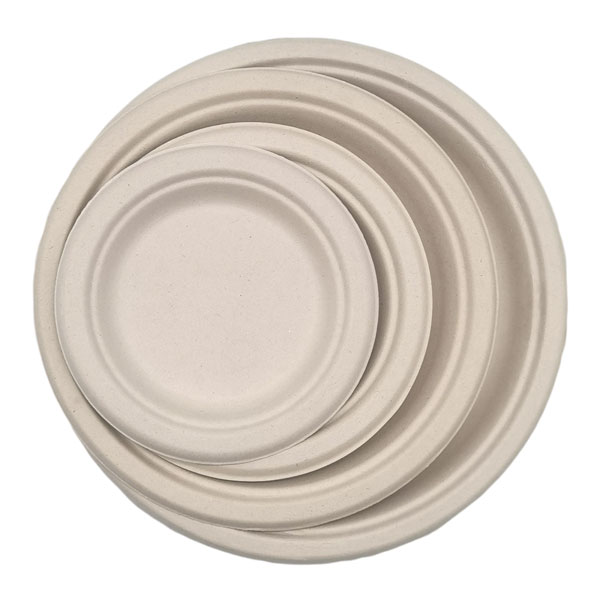
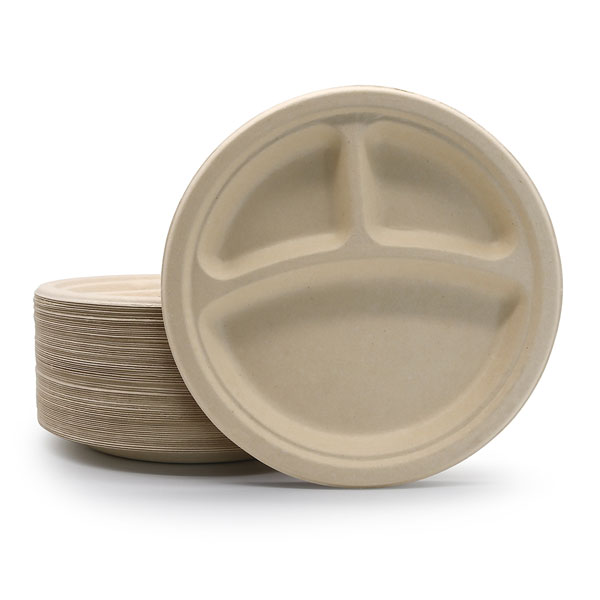
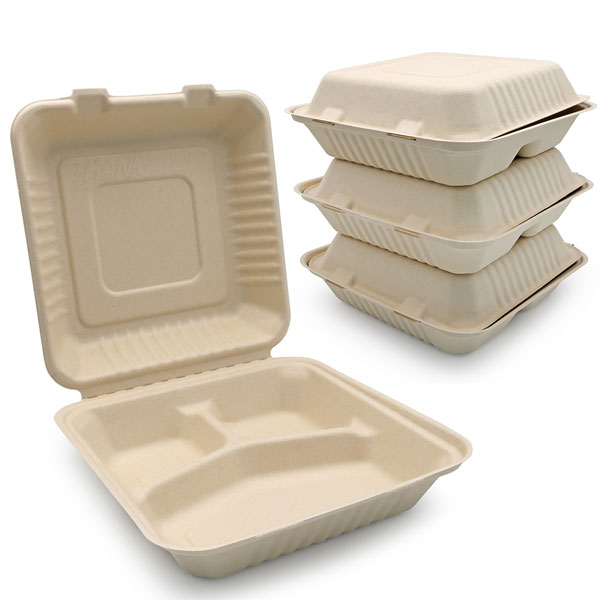
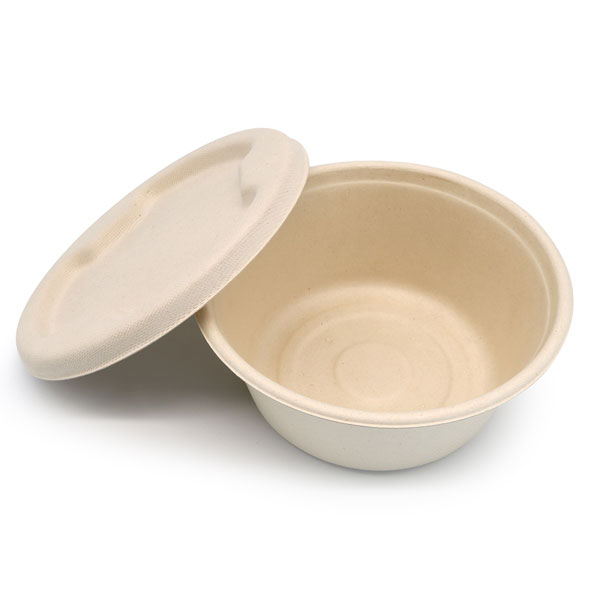
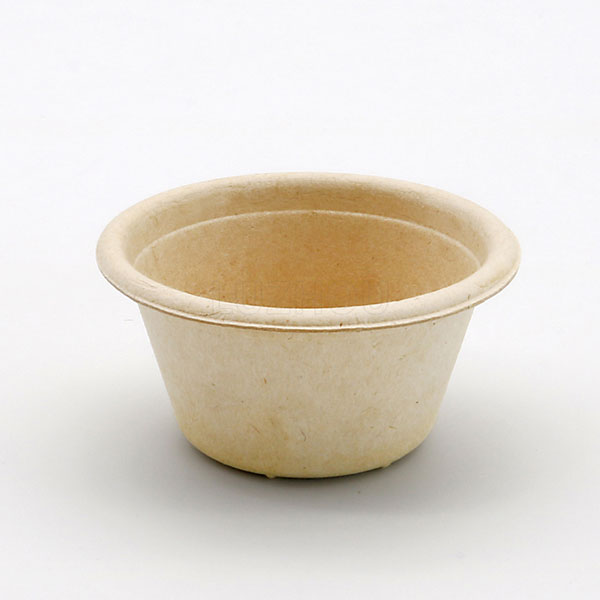
For B2B buyers in the food service and catering industry, choosing compostable plates often feels like a compromise. You want to meet sustainability mandates and consumer demand, but you can't sacrifice performance. The common pain points are real: soggy plates, lukewarm food, and disappointed customers. What if the solution wasn't a trade-off, but a superior material science breakthrough? Enter bagasse fiber—and its secret lies in its microscopic architecture.
Bagasse, the fibrous residue from sugarcane, is not just waste. Under magnification, it reveals a complex, porous matrix. This natural microstructure is a labyrinth of tiny air pockets trapped within the resilient cellulose fibers. Why does this matter for your compostable plates? Air is one of nature's best insulators. This intricate design drastically slows down the transfer of heat, forming the foundational principle behind exceptional thermal retention without synthetic liners or coatings.
Thermal conductivity measures how easily heat passes through a material. A lower value means better insulation. Our engineered bagasse fiber achieves an exceptionally low thermal conductivity of 0.08W/m·K. To put this in context, many standard plastics or plain paper plates have significantly higher values, meaning heat escapes rapidly. This specific 0.08W/m·K rating is the scientific key to the 4-hour food preservation claim. It translates directly to hot food staying hot, and cold food staying cold, for the duration of events, deliveries, or buffet service—eliminating the core complaint of temperature loss.
How does this microstructure and thermal property work in practice? When hot food is placed on the plate, the heat is not conducted away through the material. Instead, it is effectively "locked in" by the insulating air pockets. The plate itself remains comfortably cool to the touch on the underside, while actively working to preserve the meal's intended temperature and quality above. This performance meets the critical window for extended catering events, food delivery logistics, and institutional serving times.
This micro-engineering doesn't just provide insulation. The interlocking fibers create a plate that is remarkably sturdy, resistant to sogginess from oily or moist foods—a major pain point with inferior compostable plates. And the lifecycle completes perfectly: after use, these plates can be commercially composted, breaking down into nutrient-rich soil, closing the loop from sustainable sourcing to sustainable end-of-life. You no longer have to choose between operational performance and environmental responsibility.
For B2B decision-makers, this isn't just a product feature; it's a value proposition. Specifying plates built on this science means elevating brand perception through premium performance, reducing customer complaints, and genuinely fulfilling corporate sustainability goals. It turns a necessary item into a talking point about innovation and genuine commitment.
The future of food service disposables is here, and it's rooted in deep material science. By understanding the correlation between the microstructure of bagasse fiber and its proven thermal insulation capabilities, businesses can make an informed, confident choice. Choose compostable plates engineered not just to disappear without a trace, but to perform exceptionally while they're in the spotlight.