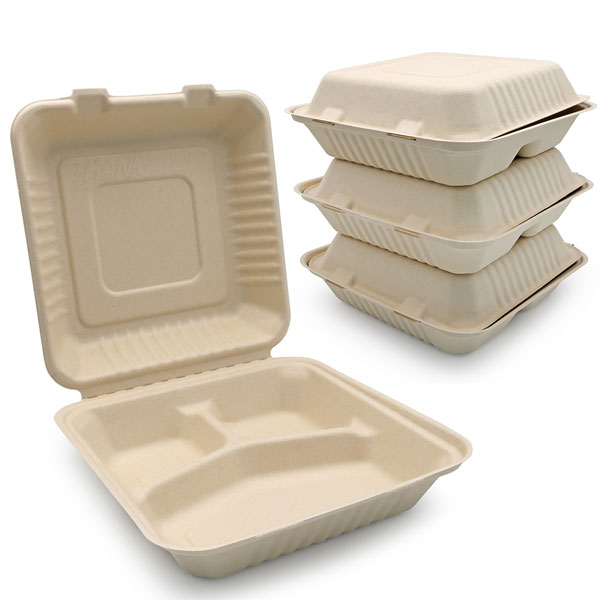
In today's eco-conscious market, your choice of disposable tableware directly impacts your brand's environmental credentials. Traditional plastic or even paper plates carry a significant, often hidden, carbon footprint from raw material extraction to end-of-life disposal. For businesses committed to sustainability, this creates a critical pain point: how to source truly low-impact packaging that aligns with corporate ESG goals and meets discerning customer expectations.
Our raw material, sugarcane bagasse, is the fibrous residue left after juice extraction. Instead of being burned as agricultural waste, we upcycle it into durable, heat-resistant compostable plates. This process starts with a negative carbon input, as the sugarcane plant itself absorbs CO₂ during growth. By utilizing a waste product, we avoid the deforestation and high water usage associated with virgin paper pulp, setting the stage for a radically different life cycle.
We subjected our entire manufacturing and distribution chain to a rigorous cradle-to-grave Life Cycle Assessment (LCA). The resulting figure of 0.5 kilograms of CO₂ equivalent per kilogram of product is a scientifically verified benchmark. Here's how we achieve it:
1. Cultivation & Raw Material Processing: The bagasse is a by-product, allocating near-zero emissions to our feedstock. Energy used in our facilities is increasingly renewable.
2. Manufacturing & Forming: Our low-energy, mechanical pulping and pressing methods minimize fossil fuel consumption compared to plastic extrusion or paper milling.
3. Transportation & End-of-Life: We optimize logistics and, most crucially, our compostable plates are designed for commercial composting, where they biodegrade into nutrient-rich soil within months, completing the carbon cycle without releasing methane—a common outcome in landfills.
This transparent footprint of 0.5kg CO₂e/kg is more than a number. It's a tool for your marketing, sustainability reporting, and procurement decisions. It provides:
- Verified Claims: Move beyond vague "green" marketing to make specific, defensible environmental statements.
- Supply Chain Decarbonization: Directly reduce Scope 3 emissions associated with your purchased goods.
- Brand Trust & Compliance: Meet the growing demand for auditable eco-data from partners, regulators, and end-consumers.
While compostability is a key end-of-life benefit, the true environmental win for compostable plates made from bagasse lies in the dramatically reduced emissions across their entire life. Choosing our products means opting for a solution that addresses climate impact at every stage—from sourcing to disposal—offering a holistic answer to the carbon footprint dilemma faced by forward-thinking businesses.
Partner with us to make your next event, catering service, or product line a testament to verified sustainability. Our compostable plates deliver the performance you need with the planet-friendly proof your brand deserves.