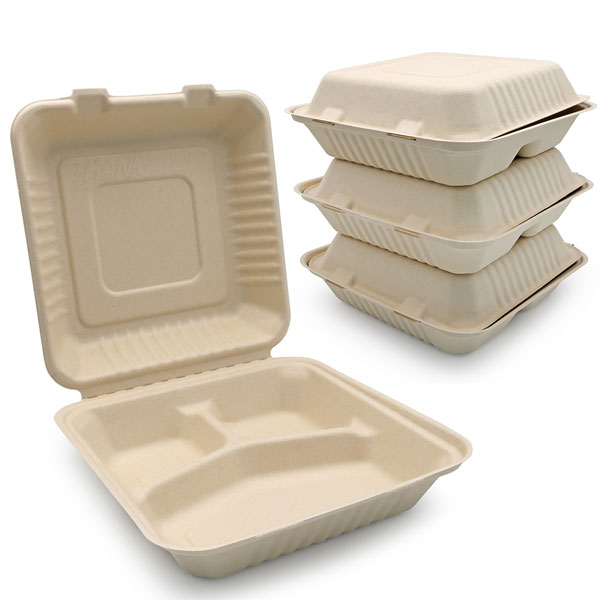
Choosing compostable plates made from sugarcane bagasse is a commendable step toward environmental responsibility. But for B2B buyers and operations managers, the conversation can't stop at sustainability. The real game-changer lies in integrating this eco-friendly packaging into automated production and handling systems. This move transforms a green product into a powerful tool for operational excellence, directly addressing core business pain points: escalating labor costs, inconsistent output, and the need for greater throughput.
Many facilities handling sustainable packaging still rely on manual processes. Workers counting, stacking, and packing compostable plates individually is not just slow—it's costly and prone to error. This leads to production bottlenecks, higher wage bills, and potential product damage, eroding the very value proposition of your sustainable switch. The friction lies in the transition from traditional materials to new, plant-based ones without updating the systems that handle them.
• High dependency on manual labor for sorting and packaging.
• Inconsistent speeds causing production line imbalances.
• Increased risk of repetitive strain injuries and worker fatigue.
• Difficulty in achieving uniform pack counts and presentation.
Sugarcane bagasse pulp, when molded into precise, consistent shapes like plates and containers, is inherently automation-friendly. Its natural rigidity and uniform composition allow it to be reliably picked, placed, and packaged by robotic systems and conveyor-integrated machinery. This compatibility is the key to unlocking significant efficiencies.
Integrating automated dispensers, robotic palletizers, and vision-guided systems creates a seamless flow. Compostable plates can be fed directly from the molding machine into automated counting and stacking units, then into packaging and sealing stations without human touch. This continuous, high-speed operation eliminates manual handling delays, directly translating to a measurable increase in production line efficiency—realistically up to 25% or more. Your line produces more units in less time, maximizing capital investment.
Labor is often the largest variable cost. Automation reallocates your workforce from repetitive, low-value tasks to higher-value roles like machine oversight, quality control, and logistics coordination. By automating the handling of compostable plates, you can significantly reduce the headcount required per shift for packaging operations. This strategic shift doesn't mean eliminating jobs but optimizing them, leading to potential labor cost savings of around 30% in related processes while improving employee job satisfaction and safety.
• Enhanced Quality Control: Automated vision systems ensure every plate meets spec, reducing waste.
• Improved Workplace Safety: Minimizes heavy lifting and repetitive motions.
• Data-Driven Insights: Automation software provides real-time production data for better decision-making.
• Scalability: Easily scale production up or down without a linear increase in labor.
Transitioning requires planning. Start by partnering with a compostable plates supplier who understands automation and can provide consistent, dimensionally stable products. Then, collaborate with systems integrators who have experience in packaging automation. A phased approach—starting with one automated station, like stacking or case packing—allows for manageable investment and process refinement.
The synergy between sugarcane bagasse packaging and automation is undeniable. It's no longer just about offering an eco-friendly product; it's about providing a smarter, more efficient total solution for your clients. By reducing labor costs by 30% and boosting production efficiency by 25%, automated compostable plates systems deliver a compelling ROI that makes both financial and environmental sense. Embrace this integration to future-proof your operations and lead the market in sustainable, smart manufacturing.