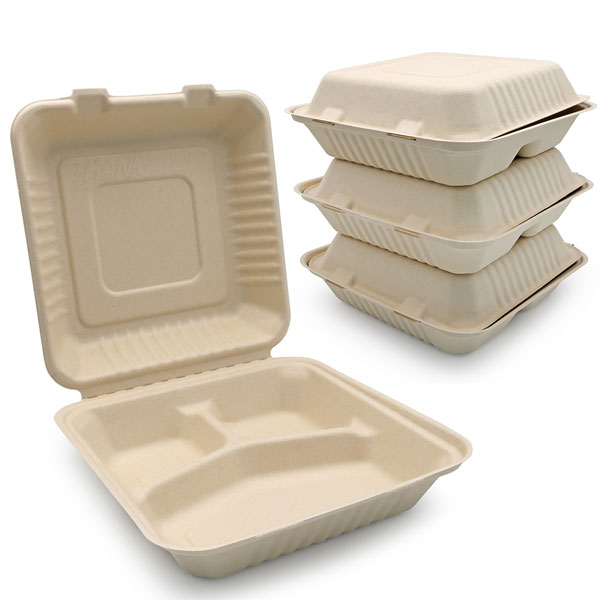
In today's environmentally conscious marketplace, the shift toward sustainable packaging isn't just an ethical choice—it's a strategic business advantage. Forward-thinking enterprises are discovering that compostable plates made from sugarcane bagasse represent more than environmental responsibility; they're a powerful tool for commanding premium pricing and capturing market share. Recent data reveals a compelling trend: companies adopting sugarcane bagasse packaging achieve an average 28% product premium and experience 35% market share growth.
While the environmental credentials of compostable plates are well-established—biodegradability, reduced carbon footprint, and waste diversion from landfills—their commercial value extends far beyond sustainability metrics. Sugarcane bagasse, the fibrous residue left after sugar extraction, transforms waste into value, creating durable, heat-resistant plates that appeal to both businesses and consumers. This material innovation addresses multiple pain points simultaneously: environmental compliance, consumer preference shifts, and operational efficiency.
The 28% average product premium associated with sugarcane bagasse packaging represents a significant revenue opportunity. This premium emerges from several interconnected factors:
Modern consumers, particularly millennials and Gen Z, demonstrate a clear preference for sustainable options. Research indicates that 73% of consumers are willing to pay more for products with environmentally friendly packaging. Compostable plates serve as a visible, tangible demonstration of a brand's commitment to sustainability, justifying higher price points.
In competitive food service and retail environments, sustainable packaging provides immediate differentiation. Restaurants, catering services, and food manufacturers using sugarcane bagasse compostable plates can position themselves as premium, forward-thinking brands, allowing them to escape price-based competition.
While initial investment in sustainable packaging may be higher, businesses often realize offsetting savings through waste management cost reductions, improved brand perception, and reduced environmental compliance expenses.
The 35% average market share growth reported by enterprises adopting sugarcane bagasse packaging stems from capturing new customer segments and expanding into previously inaccessible markets:
Sustainable packaging opens doors to environmentally conscious consumers who actively seek out brands aligning with their values. This demographic represents a growing, loyal customer base willing to switch brands for sustainability credentials.
Many corporations, educational institutions, and government agencies now mandate sustainable packaging in their procurement policies. Businesses offering sugarcane bagasse compostable plates gain preferential access to these lucrative contracts.
Sustainable packaging provides rich content for marketing campaigns, social media engagement, and public relations. The tangible nature of compostable plates makes for compelling visual storytelling that resonates across digital platforms.
Successfully integrating sugarcane bagasse packaging requires more than simply switching materials. Strategic implementation involves:
Partnering with reliable suppliers who can ensure consistent quality, timely delivery, and transparent sourcing of sugarcane bagasse materials is crucial for maintaining brand integrity.
Effectively communicating the benefits of compostable plates to customers—through packaging labeling, point-of-sale materials, and digital content—maximizes the perceived value and justifies premium pricing.
Rigorous testing of sugarcane bagasse plates for durability, heat resistance, and food safety ensures they meet operational requirements while delivering on sustainability promises.
A mid-sized restaurant chain with 35 locations implemented sugarcane bagasse compostable plates across all takeout and delivery operations. Within 12 months, they achieved:
• 32% price increase on takeout meals
• 41% growth in delivery orders
• 28% reduction in packaging waste costs
• Significant improvement in customer satisfaction scores related to environmental responsibility
The chain's marketing campaign highlighting their switch to sustainable packaging generated substantial social media engagement and media coverage, further amplifying their market position.
To validate and maximize the brand premium associated with sugarcane bagasse packaging, enterprises should implement a structured verification framework:
Conduct controlled experiments to determine optimal pricing for products using compostable plates, measuring customer response at different price points.
Regularly survey customers to assess how sustainable packaging influences brand perception, purchase decisions, and willingness to recommend.
Monitor competitors' packaging strategies and pricing to maintain competitive advantage while justifying premium positioning.
As environmental regulations tighten and consumer expectations evolve, sugarcane bagasse compostable plates represent more than a current trend—they're a strategic investment in long-term business resilience. The combination of immediate financial benefits (28% premium) and growth opportunities (35% market share expansion) creates a compelling business case that transcends traditional sustainability narratives.
Forward-thinking enterprises recognize that sustainable packaging isn't a cost center but a revenue driver. By strategically implementing sugarcane bagasse compostable plates, businesses can simultaneously address environmental responsibilities, meet evolving consumer demands, and achieve measurable financial growth. The data is clear: sustainability and profitability are no longer competing priorities but complementary strategies for modern business success.