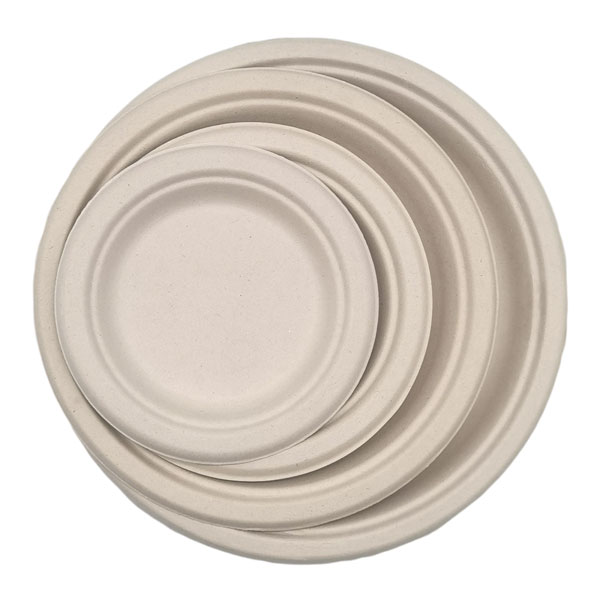
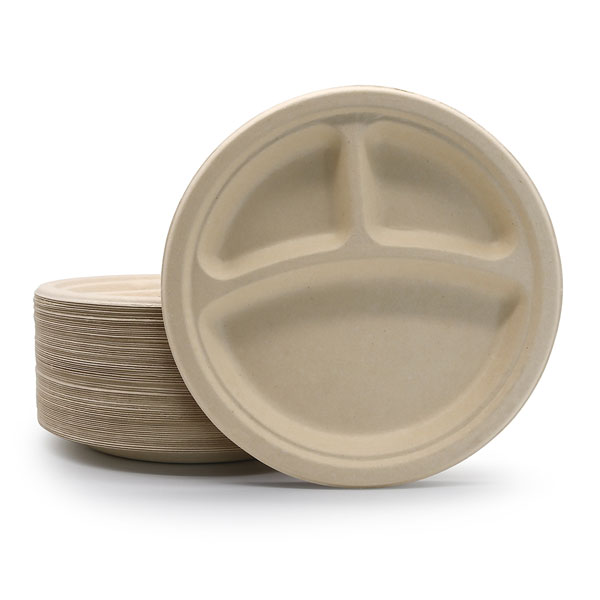
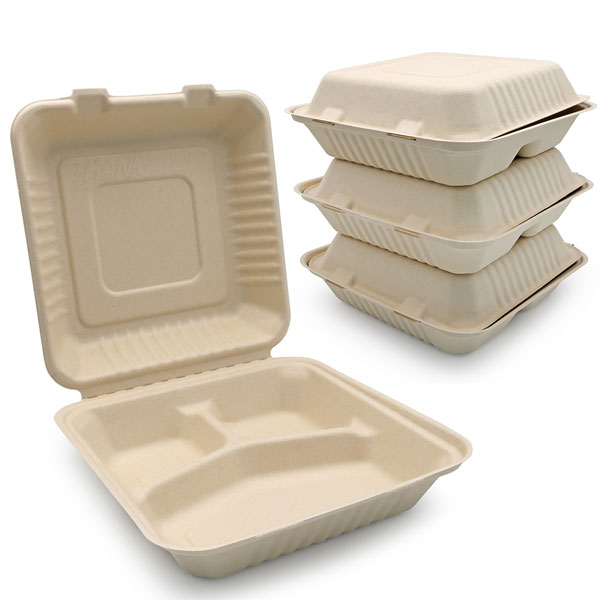
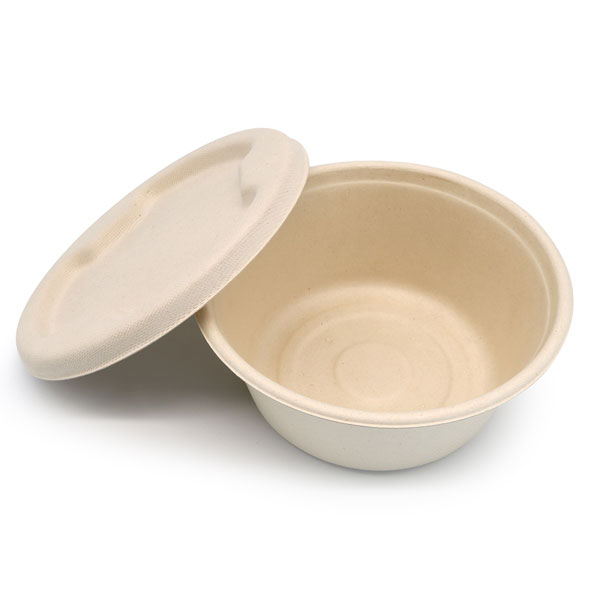
For businesses making the switch to sustainable packaging, a critical question often overshadows environmental benefits: Will these compostable plates hold up under real-world pressure? Concerns about durability, leaks, and customer dissatisfaction are major pain points. This is where science, not just sentiment, must lead the conversation. We subjected our sugarcane bagasse food containers to rigorous mechanical testing to provide you with data-driven confidence.
Our performance test simulates extreme real-life scenarios. Using a standardized compression tester, we applied incremental vertical force to the center of our containers—filled with a moisture-simulating gel—until structural failure. Key metrics measured included deflection (bending) under load and the ultimate point of failure. This process mirrors the stacking, transporting, and serving of heavy, saucy dishes in catering or food service.
The 5kg capacity isn't an arbitrary figure. It represents a significant safety margin above typical food loads. Consider a hearty portion of pasta, a dense casserole, or a stacked burger meal—these rarely exceed 2-3kg. Our compostable plates engineered from sugarcane bagasse are designed to handle such weights without noticeable deformation, ensuring they feel secure in a customer's hands and prevent costly spills.
Sugarcane bagasse isn't just fibrous waste; it's a naturally resilient material. Under heat and pressure, these long, interlocking cellulose fibers create a dense, mesh-like network. This natural matrix provides exceptional rigidity and impact resistance compared to materials like molded pulp or certain thin plastics. Our proprietary molding process optimizes this innate strength, focusing on rib design and wall thickness at stress points to enhance load distribution.
The transition to eco-conscious packaging requires trust. Our load-bearing performance tests provide the scientific foundation for that trust, demonstrating that our sugarcane bagasse containers are engineered not just to decompose responsibly, but to perform reliably from kitchen to table. For B2B clients, this means reducing risk, enhancing customer experience, and making a sustainability claim backed by undeniable proof. Choose compostable plates that carry the weight of your business needs and environmental values.