In the competitive catering industry, every cost-saving measure and brand differentiator counts. While the initial price tag of traditional plastic or styrofoam containers might seem lower, a long-term financial analysis reveals a compelling truth: sustainable packaging, specifically products made from bagasse, offers significant cost advantages and value enhancement. This article delves into how adopting compostable plates and food containers can lead to substantial savings and a stronger market position.
Many catering enterprises focus solely on the per-unit purchase price. However, the true cost of packaging extends far beyond this line item. Traditional plastics and foams often incur hidden expenses such as waste disposal fees, which are rising globally as landfills reach capacity and regulations tighten. Furthermore, these materials offer no end-of-life value, representing a pure cost sink. They also carry a growing brand risk as consumer sentiment shifts decisively towards environmental responsibility.
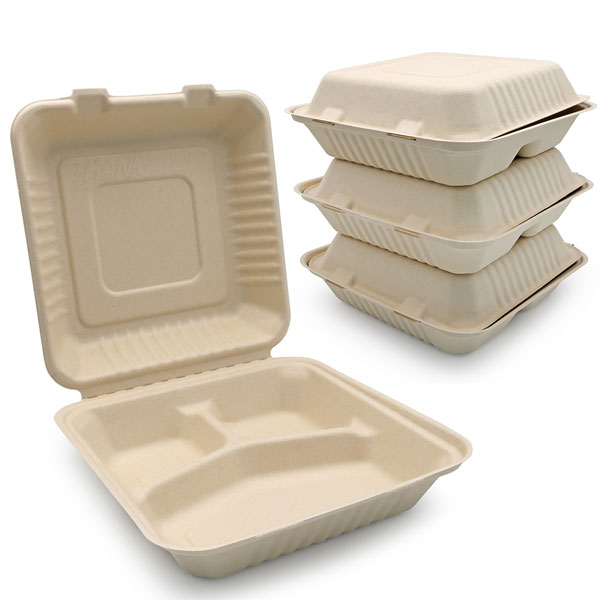
Bagasse, the fibrous residue from sugarcane processing, is transformed into sturdy, microwave-safe, and leak-resistant food containers. As a by-product, it's a cost-stable raw material. The manufacturing process for these compostable plates has become highly efficient, closing the price gap with conventional options. But the real savings emerge over time.
A comprehensive ROI model for catering businesses shows an average net packaging cost reduction of 15% over a 2-3 year period. This is achieved through:
1. Waste Stream Diversion and Lower Disposal Fees: By switching to certified compostable packaging, businesses can significantly reduce their volume of general waste. In regions with organic waste collection or on-site composting, this can lead to direct savings on trash hauling costs.
2. Bulk Purchasing and Supply Chain Stability: Committing to a long-term supplier of bagasse products often secures favorable bulk pricing. Unlike petroleum-based plastics, bagasse is less susceptible to volatile oil price spikes, offering more predictable budgeting.
3. Operational Efficiencies: High-quality compostable plates are designed for functionality, often stacking better and requiring less storage space. Their natural insulation properties can also reduce the need for additional wrapping, simplifying packaging lines.
The financial return isn't limited to direct cost savings. Sustainable packaging is a powerful marketing tool that drives intangible brand equity into tangible profits.
1. Meeting B2B Client Demand: Corporations, universities, and event planners are under increasing pressure to meet ESG (Environmental, Social, and Governance) goals. Caterers offering sustainable service with clear, certified compostable plates become preferred vendors, securing more contracts and client loyalty.
2. Premium Brand Positioning: Using eco-friendly packaging allows you to command a slight price premium or simply win business based on a superior brand image. It tells a story of responsibility and forward-thinking that resonates deeply with modern consumers and clients.
3. Positive Publicity and Social Proof: Showcasing your switch to bagasse containers in marketing materials, on social media, and at events generates positive publicity. It's a visible, tangible proof point of your commitment, often shared by satisfied clients, amplifying your reach.
Transitioning to bagasse-based compostable plates should be viewed not as an expense, but as a strategic investment in operational efficiency and brand development. Start with a pilot program for specific event types or corporate clients to measure customer response and operational fit. Partner with a supplier who can provide customization—branding your containers with logos further turns packaging into a marketing asset.
The long-term ROI of eco-friendly packaging is clear. It reduces direct costs through waste and efficiency gains while simultaneously building a more valuable, resilient, and attractive brand. For the forward-thinking catering enterprise, compostable plates made from bagasse are not just an ethical choice; they are a financially astute business decision.