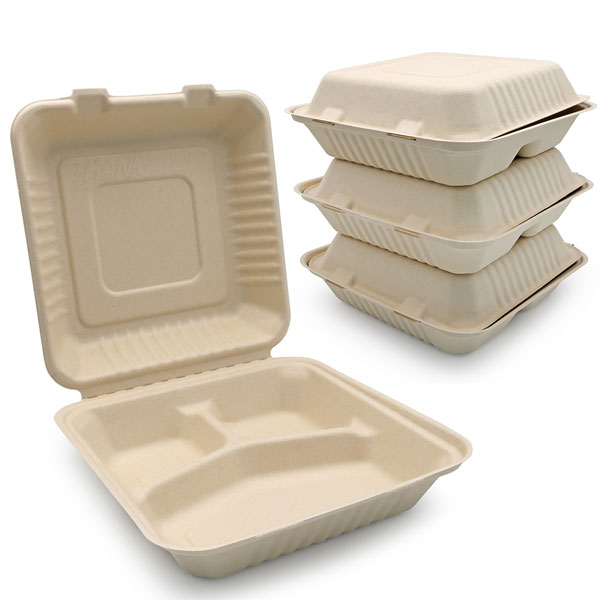
Airline meal packaging faces a unique and brutal set of demands. Meals must be prepared days in advance, stored in deep-freeze conditions as low as -40°C, then rapidly reheated in convection ovens that can exceed 220°C before being served at 35,000 feet. Traditional plastic or aluminum trays often crack, warp, or leach chemicals under this stress, while non-recyclable waste piles up. The aviation industry urgently needs a solution that is both operationally resilient and environmentally responsible. This is where advanced compostable plates and containers, specifically engineered from sugarcane pulp, are taking off.
Not all eco-friendly packaging is built for such rigors. Our aviation-grade compostable plates are crafted from bagasse—the fibrous residue left after extracting juice from sugarcane. This by-product material is not only renewable but, when processed with proprietary technology, gains exceptional structural integrity. Unlike some bioplastics that may soften or degrade, sugarcane pulp forms a rigid, microwave-safe, and ovenable matrix capable of withstanding the entire temperature spectrum of flight catering logistics.
The secret lies in the material's natural cellulose fibers and our manufacturing process. The containers are designed to handle thermal shock without compromising their shape or safety. At -40°C, they remain shatter-proof and easy to handle. When transferred directly to high-temperature reheating ovens, they resist warping, prevent leakage, and ensure even heat distribution for consistent meal quality. This reliability eliminates in-flight service hiccups and maintains passenger satisfaction.
Switching to sugarcane pulp containers directly addresses key operational and environmental goals:
Waste Reduction & Compliance: After use, these compostable plates can be processed in industrial composting facilities, breaking down into nutrient-rich soil within months. This drastically reduces the volume of cabin and galley waste destined for landfill, helping airlines meet stringent ESG (Environmental, Social, and Governance) targets and regional regulations on single-use plastics.
Passenger Appeal & Brand Image: Modern travelers are increasingly eco-conscious. Showcasing genuine, high-performance sustainable packaging enhances an airline's brand, demonstrating a commitment to innovation and planetary care without sacrificing service quality.
Supply Chain Simplicity: A single container type that performs flawlessly across freezing, reheating, and serving simplifies inventory and logistics for caterers, reducing errors and potential waste.
The adoption of high-performance sugarcane pulp packaging represents more than a material swap; it's a step toward a circular economy in aviation. Meals are served on durable, compostable plates that, after their journey, return to the earth. This closed-loop system aligns with global sustainability mandates while providing the technical performance the industry requires.
For airline caterers and procurement officers, the choice is clear. Embracing sugarcane pulp containers is a strategic move that ensures operational excellence, satisfies passenger expectations, and fulfills environmental stewardship—proving that the most sustainable choice can also be the most robust.