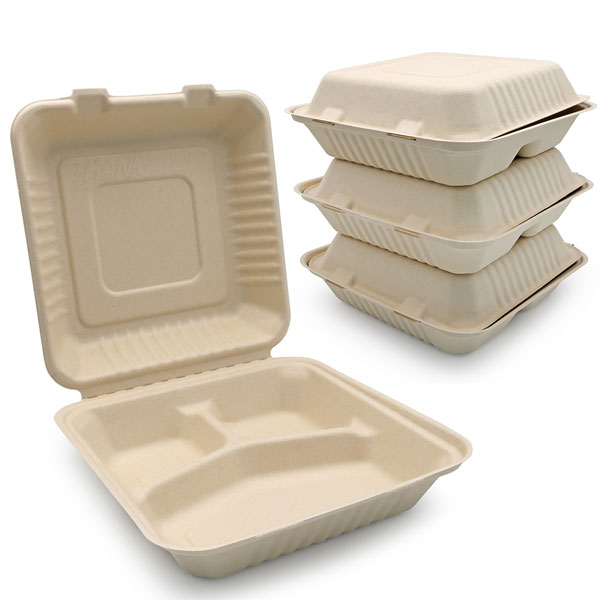
In the urgent race to decarbonize, most businesses focus on reducing their carbon footprint. But what if your packaging could actively reverse climate impact? A landmark quantitative study on bagasse packaging reveals a paradigm shift: a net negative carbon emission of -1.5 kg CO₂e per kilogram of packaging over its life cycle. This isn't just low-impact; it's climate-positive.
The life cycle assessment (LCA) scrutinizes every phase—from sugarcane cultivation, bagasse collection, and plate manufacturing to distribution, consumer use, and end-of-life composting. Traditional plastics or even some bioplastics show a positive carbon cost. Bagasse, a fibrous byproduct of sugar production, flips the script. As sugarcane grows, it absorbs significant CO₂. When its pulp is transformed into sturdy compostable plates, the carbon remains stored. Upon commercial composting, the plates decompose rapidly, enriching soil without releasing the stored carbon back as methane—a common issue in landfills. The LCA quantifies this sequestration, proving these plates are a net carbon sink.
For hotels, caterers, and food service brands, sustainable sourcing is fraught with challenges: greenwashing accusations, complex regulations, and premium costs. This data transforms the narrative. Offering compostable plates certified as carbon-negative provides a powerful, verifiable marketing claim. It directly supports ESG reporting, meets stringent single-use plastic bans, and appeals to eco-conscious clients. The waste stream becomes a value stream, turning used packaging into nutrient-rich compost, closing the loop meaningfully.
Adopting this technology requires partnership with a specialized manufacturer. The key is ensuring the entire chain—from sourcing to certified composting infrastructure—is aligned to realize the full -1.5 kg CO₂e benefit. Customizable for branding, these durable, heat-resistant plates perform without compromising function. This LCA data is not just an environmental metric; it's a strategic business tool for differentiation in a crowded market, proving that operational choices can be both ecologically restorative and commercially astute.
The era of simply 'doing less harm' is over. With bagasse-based compostable plates, your business can be part of an active carbon drawdown solution, turning every event or meal service into a tangible contribution to planetary health.